Empty cart
Oh no! It appears your cart is empty. Add some almonds to your daily regime with the Treehouse products.
All Blog PostsNews

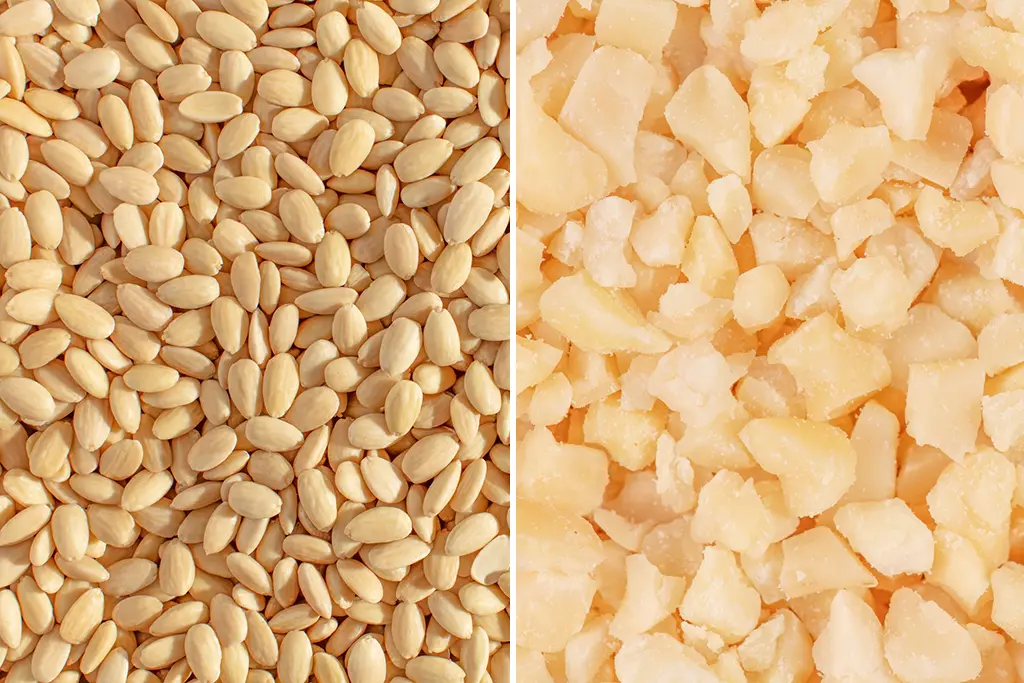
Almonds are one of the most versatile and sought-after ingredients in the food industry. Whether you’re in the snack, bakery, confectionery or dairy alternatives industry, choosing between whole almonds and processed almonds (such as blanched, sliced, diced, flour or butter) can significantly impact your production efficiency, product quality and overall business profitability. So, which option is best for your business?

Whole almonds are a staple ingredient in many industries, offering both aesthetic and nutritional benefits. Some key advantages include:
– Minimal processing – Maintains its natural shape and nutritional content.
– High consumer appeal – Ideal for snack products where texture and visual appeal are important.
– Versatile Applications – Used in trail mixes, chocolate coatings, roasted nut mixes and more.
– Longer shelf-life – Less exposed surface area reduces oxidation and maintains freshness longer.
Whole almonds may require additional processing at the production level, which can increase complexity and cost depending on your operational setup.
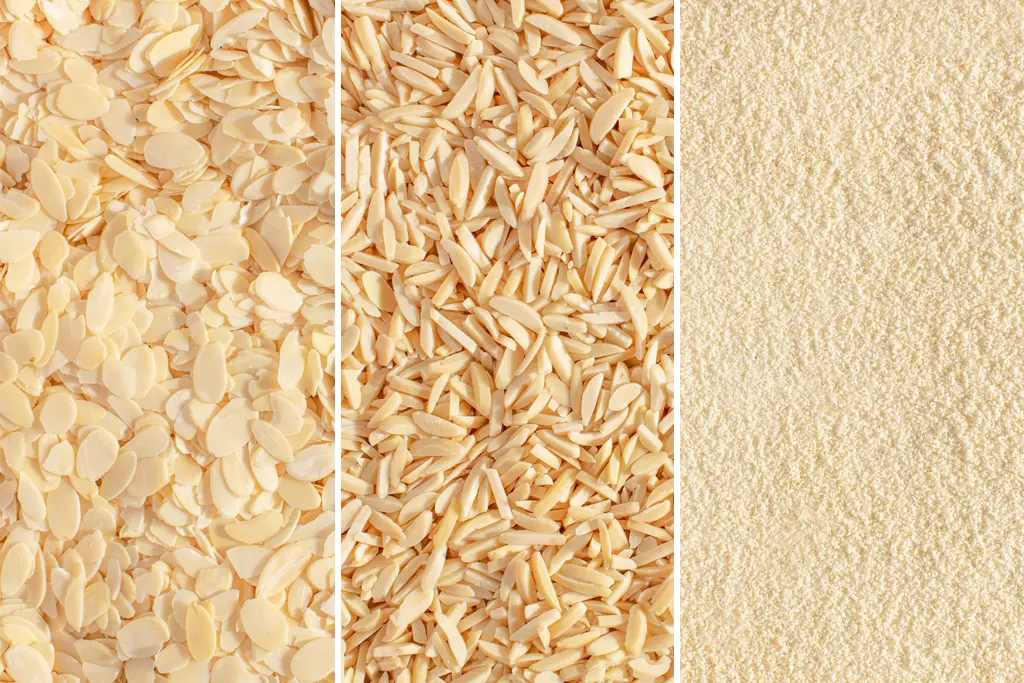
Processed almonds (sliced, diced, slivered, blanched and almond flour) provide companies with flexibility and consistency in production and have many benefits:
– Ease of use – Pre-cut or ground options streamline manufacturing processes.
– Standardization of texture and size – Crucial for baked goods, confectionery and formulated food products.
– Better ingredient integration – Almond flour, butter and pastes blend seamlessly into recipes for smooth formulations.
– Customizable options – Choose from different sizes, textures and processing levels to suit your needs.
Processed almonds sometimes have a shorter shelf life due to increased exposure to air, but proper storage techniques can mitigate this challenge.

Choosing between whole and processed almonds depends on your product goals and operational efficiency. If:
At Treehouse Almonds, we provide high-quality whole and processed almond solutions tailored to your business needs. Whether you need whole almonds in bulk or custom processed options, we can help you find the perfect fit.
Ready to optimize your almond ingredient strategy?
Contact us to explore your options! Together we can elevate your business. sales@treehousealmonds.com
Source:
Almond Board of California – https://www.almonds.com
USDA (United States Department of Agriculture) – https://fdc.nal.usda.gov
Food Business News – https://www.foodbusinessnews.net
Stay tuned for the release of significant almond industry information, such as almond crop estimates and acreage reports. You’ll also find Almond Board shipping reports and related analysis from the Treehouse Almonds Leadership Team.
Be in the loop for vital news about the California almond market.
Enjoy 10% off when you order 6 or more