
Empty cart
Oh no! It appears your cart is empty. Add some almonds to your daily regime with the Treehouse products.
All Blog PostsNews

A technical guide for formulators, procurement teams, and product developers sourcing almond oil at industrial scale.
Almond oil occupies a distinctive position among vegetable oils: it is simultaneously a premium food ingredient and a high-performance personal care base, and the same quality parameters that make it valuable in food formulations are what make it effective in skin and hair care applications. For industrial buyers, the sourcing decision is not simply which oil, but which grade, which extraction method, and which supplier can deliver a consistent specification at scale.
In this article, we cover what almond oil is from an industrial perspective and how extraction method affects quality; the distinction between food grade and cosmetic grade; key quality parameters including fatty acid profile and peroxide value; primary applications across food and personal care manufacturing; practical sourcing considerations including shelf life, storage, and packaging; and how Treehouse Almonds supports industrial buyers with a premium cold-pressed specification.
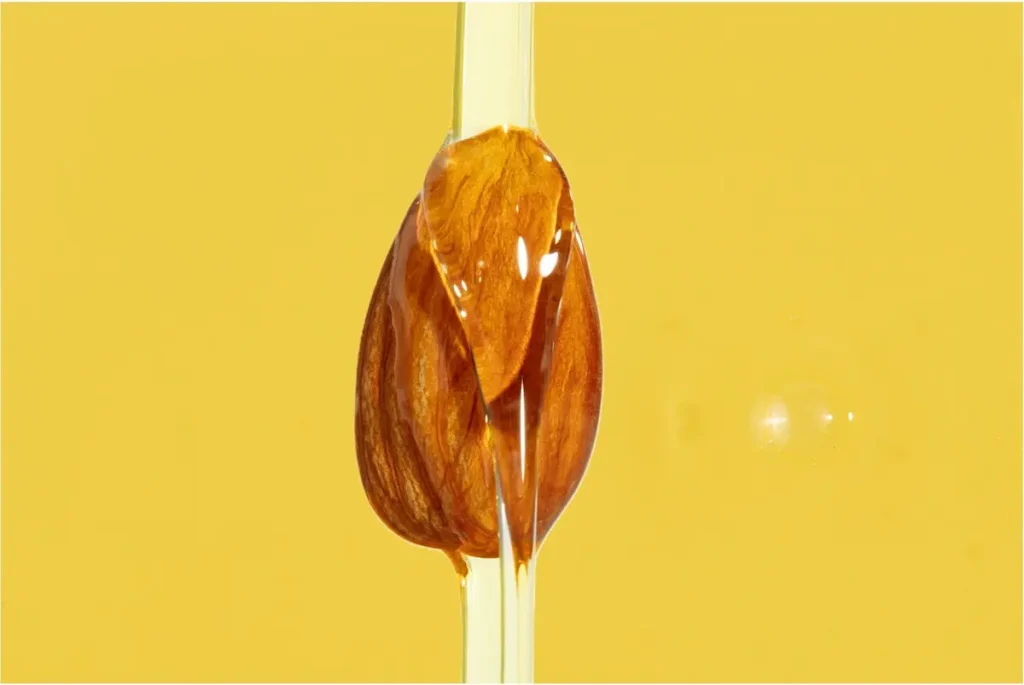
Cold pressing involves mechanically pressing the almond kernels at controlled low temperatures, without heat or chemical solvents. This method preserves the oil’s natural fatty acid profile, tocopherols (Vitamin E), phytosterols, and delicate flavor compounds, resulting in a pale yellow oil with a light, sweet nutty aroma.
Cold-pressed almond oil is the highest-quality specification available and the exclusive production method used at Treehouse Almonds. Our almond oil is created exclusively from high-quality, food-grade blanched California almonds, cold-pressed to extract a virgin oil that is superior in quality to the commoditized and flavorless refined almond oils widely available on the commodity market.
Expeller pressing uses mechanical pressure at higher temperatures than cold pressing, generating more heat through friction. This method yields more oil per batch, making it more efficient for high-volume industrial applications. However, the higher processing temperatures partially degrade heat-sensitive nutrients and flavor compounds, resulting in an oil with lighter flavor and reduced tocopherol content compared to cold-pressed.
Refined almond oil undergoes additional processing steps, including degumming, neutralization, bleaching, and deodorization, to produce a colorless, odorless, flavor-neutral oil with a longer shelf life. While widely available as a commodity ingredient, refined almond oil lacks the nutritional and sensory qualities of cold-pressed oil and is generally not suitable for food applications where almond flavor is a product feature or where clean-label positioning is a requirement.
Source: Treehouse Almonds — Almond Oil Wholesale
Food grade and cosmetic grade almond oil carry the same chemical composition and botanical origin. The difference lies in the regulatory framework, facility requirements, and testing protocols applied at each stage of production.
| Specification | Food grade | Cosmetic grade |
|---|---|---|
| Regulatory framework | FDA food safety standards; cGMP for food production; FDA-registered facility required | ISO 22716 GMP (cosmetics); no pre-market approval required in US; ECOCERT if certified organic |
| Peroxide value | Maximum 5.0 meq O₂/kg (virgin); maximum 15.0 (refined) | Maximum 5.0 meq O₂/kg recommended for premium cosmetic grade |
| Processing | Cold-pressed or expeller; food-safe methods only throughout all stages | Cold-pressed preferred; solvent extraction permitted if residues are within controlled limits |
| Allergen control | Full allergen management program required; tree nut labeling mandatory under FDA FALCPA | Controlled under cosmetic regulations; INCI declaration required on finished product |
| Traceability | Full lot traceability; certificate of analysis per batch | Full lot traceability; certificate of analysis per batch |
| Certifications | BRC Global Standards, Kosher, Halal, FSSC 22000 or SQF (where applicable) | ISO 22716, ECOCERT (organic), Cosmos Natural or Organic (where applicable) |
| Cross-use | Food grade oil may be used in cosmetic formulations; food safety standards are generally stricter than cosmetic standards | Cosmetic grade oil must never be used in food manufacturing under any circumstances |
Source: FDA — Current Good Manufacturing Practices (cGMP) for Food
Source: ISO 22716:2007 — Cosmetics Good Manufacturing Practices
Source: FDA — Food Allergen Labeling and Consumer Protection Act (FALCPA)
Industrial buyers sourcing almond oil should evaluate the following quality parameters in supplier specifications and certificates of analysis.
Source: Almond Board of California — Lipid Oxidation and Oil Migration
Source: Almond Board of California — Shelf Life Reading Slides
Source: Cosmetics Info — Prunus Amygdalus Dulcis (Sweet Almond) Oil
Our almond oil is valued by food and cosmetics producers around the world due to its versatility, flavor, aroma, and healthful qualities. In food manufacturing, it delivers a combination of sensory and nutritional attributes that few other oils can match at this quality level.
For centuries, people have used almond oil directly on their skin. Today, makers of beauty products use high-quality almond oil in a range of skin creams, lotions, hydration products, and beauty applications where a natural, Vitamin E-rich ingredient is valued. Industrial applications include:
Source: Cosmetics Info — Prunus Amygdalus Dulcis (Sweet Almond) Oil
Almond oil’s shelf life is primarily determined by its peroxide value at time of production and the storage conditions maintained throughout the supply chain. Lipid oxidation, driven by exposure to heat, light, and air, is the primary quality risk for all almond oil formats.
Source: Treehouse Almonds — Almond Oil Wholesale (storage specifications)
Source: Almond Board of California — Shelf Stability and Shelf Life
Treehouse Almonds produces cold-pressed virgin almond oil exclusively from high-quality, food-grade California almonds, blanched before pressing to deliver a clean, consistent oil that exceeds the quality of refined commodity alternatives. Our almond oil is flavorful and sweet with a subtle nuttiness, high in monounsaturated fats and Vitamin E, and highly versatile for both food production and personal care applications. For food manufacturers, it performs well across baking and cooking applications, including frypan use due to its high smoke point. For cosmetic formulators, it provides the Vitamin E-rich emollient properties and aroma that premium personal care applications require.
Treehouse almond oil is available in industrial packaging, including 5-gallon pails and IBC totes (1,700–2,200 lbs), with full lot traceability and certificates of analysis provided for each batch. Certifications include Kosher, Halal, BRC Global Standards, CCOF (organic), Bee Friendly Farming, Sedex, UL, and EcoVadis. For manufacturers whose sourcing programs also include other almond formats, Treehouse serves as a single-source almond ingredient partner across all product lines. Full details are available at the Treehouse wholesale products page and the food safety and quality systems page.
Questions or larger-volume inquiries (> 1,500 lbs): contact us directly.
Order samples or small quantities (< 1,500 lbs): visit the Treehouse Online Shop.
Treehouse Almonds — Almond Oil Wholesale
Treehouse Almonds — Food Safety & Quality Systems
Almond Board of California — Lipid Oxidation and Oil Migration
Almond Board of California — Shelf Stability and Shelf Life
Almond Board of California — Shelf Life Reading Slides
FDA — cGMP for Food and Dietary Supplements
FDA — Food Allergen Labeling and Consumer Protection Act (FALCPA)
Be in the loop for vital news about the California almond market.
Enjoy 10% off when you order 6 or more