Empty cart
Oh no! It appears your cart is empty. Add some almonds to your daily regime with the Treehouse products.
All Blog PostsAlmond Market UpdatesNews

Updated in: September 08, 2026
. • All Blog Posts • News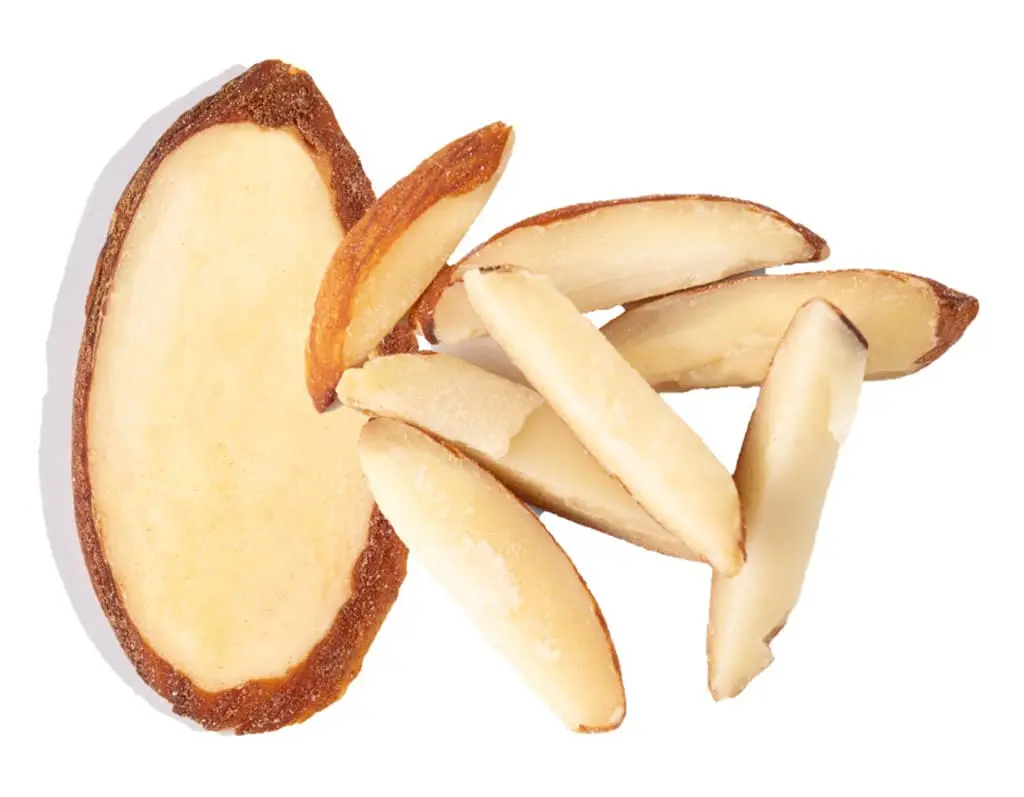
Almonds are a versatile and nutritious ingredient widely used in the culinary world, but not all almond cuts are created equal.
Almonds are a versatile and nutritious ingredient widely used in the culinary world, but not all almond cuts are created equal. Two popular forms, sliced almonds and slivered almonds, are often confused, but they serve distinct purposes based on their shape, color, and applications. In this blog, we’ll explore the differences between these two styles of almonds, how they’re made, and their uses in the food industry.
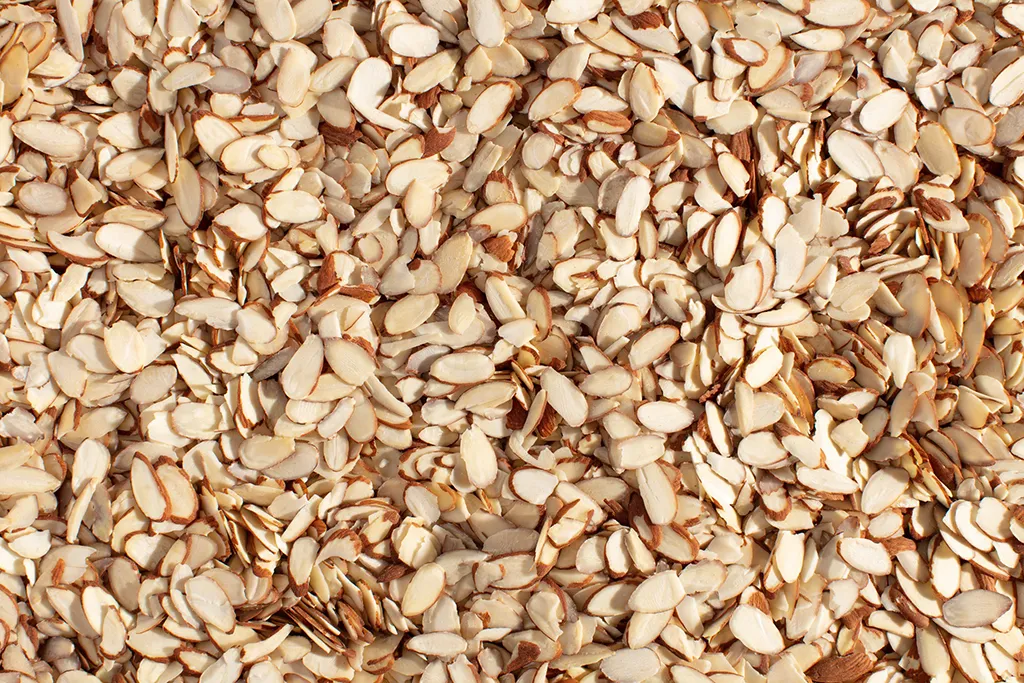
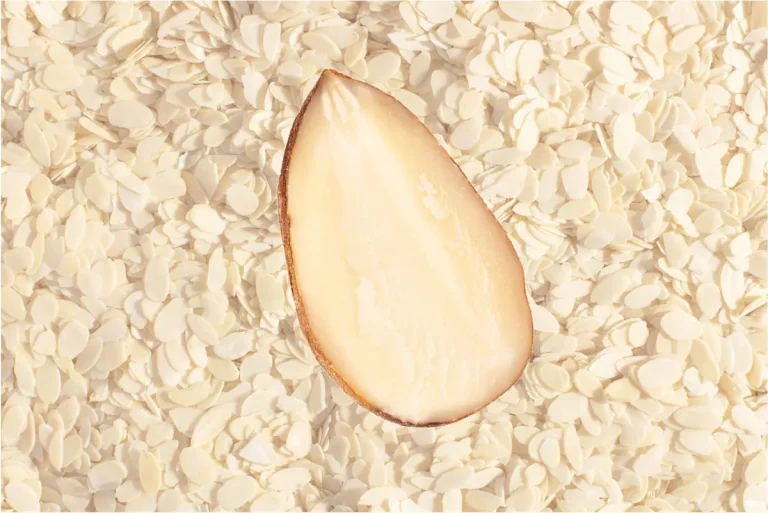
Sliced almonds are thin, flat almond pieces, typically cut crosswise from whole almonds. Their delicate structure provides an elegant, natural look.
Blanched sliced almonds: Have the skin removed, creating a clean, creamy white appearance.
Natural sliced almonds: Keep the brown skin, adding a rustic appearance and slightly more fiber.
Treehouse California Almonds produces sliced almonds across a full range of thicknesses using state-of-the-art slicing technology. The standard input uses almonds sized 27/30 AOL (almonds per ounce by length), while the Top Quality (TQ) line uses a premium 25/27 AOL input, delivering larger, more uniform slices.
Below are Treehouse’s top sliced almond products with their precise thickness specifications and quality benchmarks:
| Product | Thickness | Input Size | Whole Slice % | Discolor % | Serious Damage |
|---|---|---|---|---|---|
| Blanched Extra Thin Sliced | .61 mm | 27/30 AOL | > 70% | < 1% | < 2% |
| Blanched Thin Sliced | .76 mm | 27/30 AOL | > 70% | < 1% | < 2% |
| Blanched Regular Sliced | 1.19 mm | 27/30 AOL | > 70% | < 1% | < 2% |
| Blanched Thick Sliced | 1.65 mm | 27/30 AOL | > 70% | < 1% | < 2% |
| Blanched Extra Thin Sliced TQ | .61 mm | 25/27 AOL | > 80% | < 0.5% | < 1% |
| Blanched Thin Sliced TQ | .76 mm | 25/27 AOL | > 80% | < 0.5% | < 1% |
| Blanched Regular Sliced TQ | 1.19 mm | 25/27 AOL | > 80% | < 0.5% | < 1% |
| Natural Regular Sliced | 1.19 mm | 27/30 AOL | > 70% | < 1% | < 2% |
| Natural Thick Sliced | 1.65 mm | 27/30 AOL | > 70% | < 1% | < 2% |
| Natural Thick Sliced TQ | 1.65 mm | 25/27 AOL | > 80% | < 0.5% | < 1% |
Standard grade: minimum 70% whole slices, less than 1% discoloration, and less than 2% serious damage.
Top Quality (TQ) grade: minimum 80% whole slices, less than 0.5% discoloration, and less than 1% serious damage — providing tighter tolerances for premium applications.
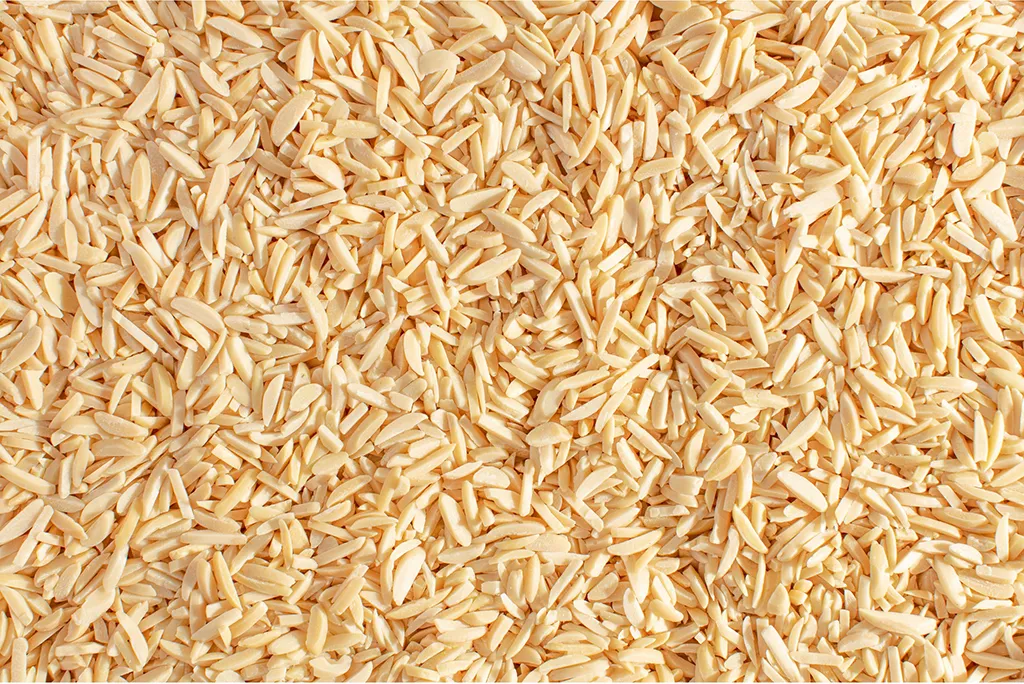
Slivered almonds are small, stick-shaped pieces, cut lengthwise from blanched almonds. Unlike the flat structure of sliced almonds, slivered almonds have a thicker, uniform rod-like shape.
Did you know? Blanched almonds are the same as peeled almonds
Slivered almonds are almost exclusively blanched, as the removal of skin is essential for their uniform appearance.
Slivered almonds are produced using precision slivering machines that cut blanched almonds lengthwise. The width of the sliver — not thickness — is the key specification. Treehouse offers both medium and regular slivered options, as well as a Top Quality (TQ) grade for premium industrial use.
| Product | Width | Input Size | Whole Slivered % | Broken % | Cross Cut % |
|---|---|---|---|---|---|
| Blanched Medium Slivered | 3.17 mm | 27/30 AOL | > 80% | < 8% | < 8% |
| Blanched Regular Slivered | 4.763 mm | 27/30 AOL | > 80% | < 8% | < 8% |
| Blanched Regular Slivered TQ | 4.763 mm | 25/27 AOL | > 85% | < 5% | < 5% |
| Natural Medium Slivered | 3.17 mm | 27/30 AOL | > 80% | < 8% | < 8% |
Standard grade: minimum 80% whole slivered pieces, with less than 8% broken and less than 8% cross-cut pieces.
Top Quality (TQ) grade: minimum 85% whole slivered pieces, with less than 5% broken and less than 5% cross-cut — delivering tighter consistency for demanding industrial processes.
| Applications of Sliced and Slivered Almonds | |
|---|---|
| Sliced Almonds | Slivered Almonds |
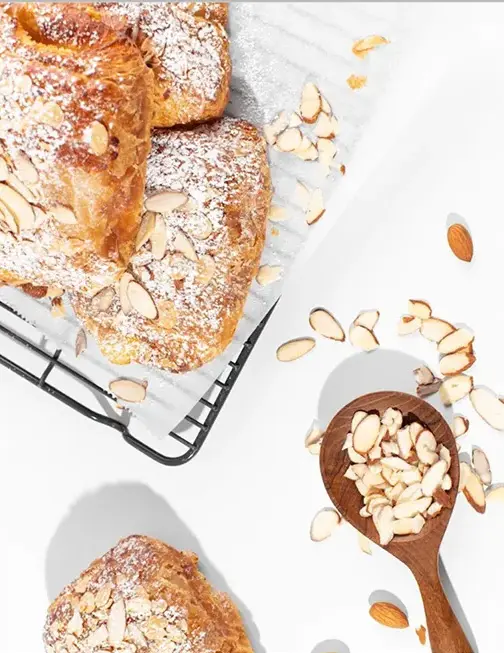
|
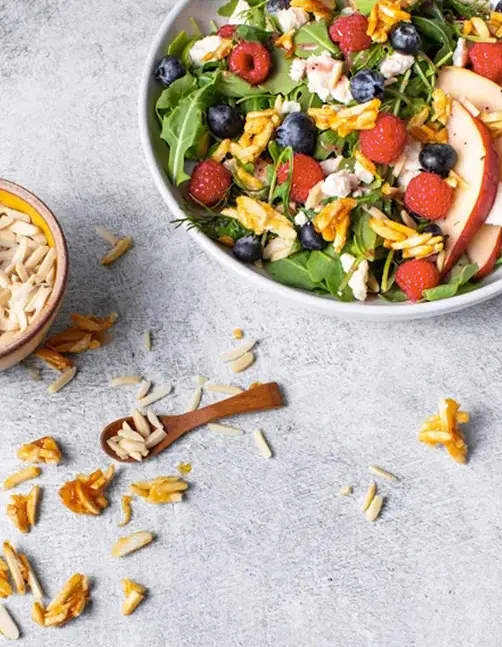
|
| Are primarily used as toppings and inclusions where a decorative touch is needed. Their fine, crunchy texture and visual appeal make them a favorite for premium products. | Are ideal for dishes where texture and crunch are more important than visual decoration. Their thicker size ensures they maintain their shape during cooking and baking, making them a robust choice for heat-intensive recipes. |
|
Baked goods: breads, cakes, muffins, pastries and cookies. Cereals and snack bars: adding texture and visual appeal. Salads: garnishing green leafy or fruit salads for an elegant presentation. Desserts: topping ice cream, yogurt and puddings. |
Savory Dishes: Rice pilafs, stir-fries, and roasted vegetable medleys. Baking: Inside bread, cookies, or cakes where they provide structure and crunch. Confectionery: Adding texture to chocolate bars and brittles. Toppings: Perfect for hearty salads and oatmeal. |
For large-scale food manufacturers, the distinction between sliced and slivered almonds goes beyond recipes — it directly affects production line performance and product consistency:
| Feature | Sliced Almonds | Slivered Almonds |
|---|---|---|
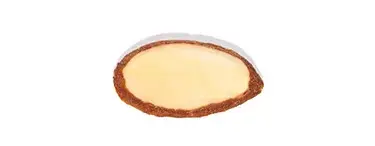
|

|
|
| Shape | Thin, flat slices | Slim, stick-like rods |
| Color Options | Natural or blanched | Exclusively blanched |
| Texture | Light and crispy | Crunchy and robust |
| Best Applications | Toppings, decorative use | Structural, texture-focused |
| Manufacturing | Crosswise slicing | Lengthwise slivering |
When deciding between sliced and slivered almonds, consider the following:
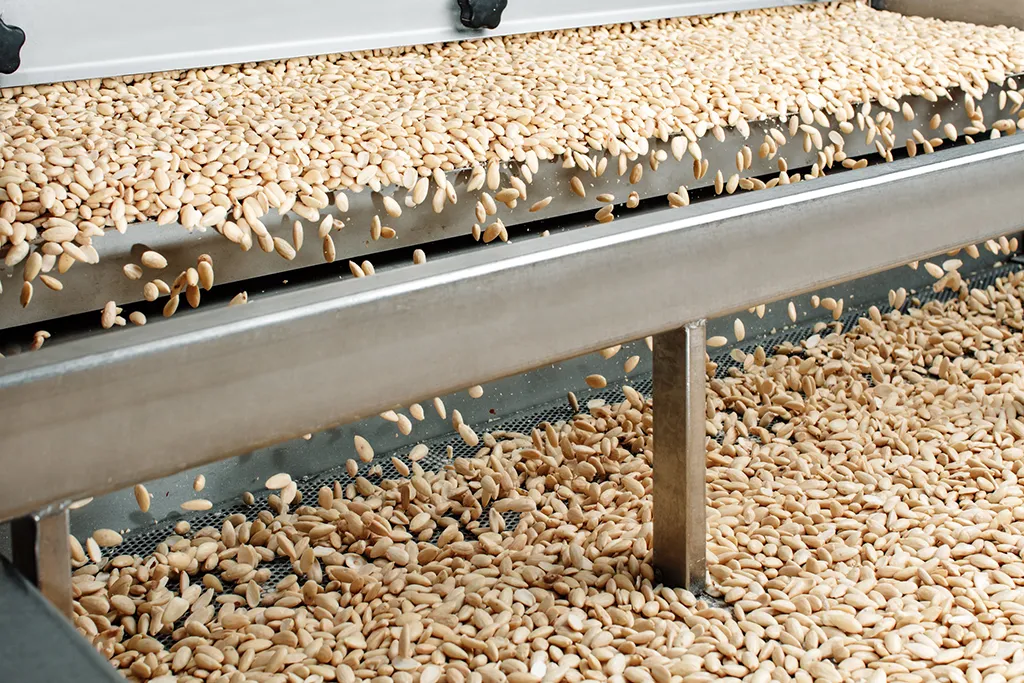
At Treehouse California Almonds, we specialize in producing premium quality almond products, including sliced and slivered almonds. Our advanced processing technology ensures:
• Precision cutting: Achieving consistent thickness and size for both styles of almonds.
• Sustainability: Partnering with growers who prioritize environmentally friendly practices.
• Customization: Solutions to meet the needs of our B2B customers.
For food manufacturers and buyers, sourcing sliced and slivered almonds directly from a grower-partnered processor like Treehouse California Almonds offers significant advantages over purchasing through intermediaries:
Contact our team at Treehouse California Almonds to explore how our products can elevate your recipes and meet your business needs: sales@treehousealmonds.com
https://treehousealmonds.com/product/blanched-sliced-almonds/
https://treehousealmonds.com/product/natural-sliced-almonds/
https://treehousealmonds.com/wholesale-products/sliced-almonds/
https://www.almonds.org/why-almonds/almonds-in-many-forms/slices-flakes
Sliced almonds are thin, flat pieces cut crosswise from whole almonds. Slivered almonds are thicker, stick-shaped pieces cut lengthwise from blanched almonds. Sliced almonds work best for decorative toppings, while slivered almonds are better suited for texture and structure in heat-intensive recipes.
Almost never. Slivered almonds are produced almost exclusively from blanched almonds, since removing the skin is essential to achieve their uniform rod-like shape. Sliced almonds, on the other hand, are available in both blanched and natural versions.
It depends on the application. Slivered almonds hold their shape better in heat-intensive baking and cooking, making them a sturdier choice for inclusions inside bread, cookies, or cakes. Sliced almonds are typically used as a topping or decorative element — for example, thin sliced almonds (0.61–0.76 mm) are common in automated croissant and pastry decoration lines.
Treehouse produces sliced almonds in a range of thicknesses, from Extra Thin (0.61 mm) to Thick (1.65 mm), in both blanched and natural versions, plus a Top Quality (TQ) line made from a larger 25/27 AOL almond input for more uniform slices.
Sliced almonds are specified by thickness (e.g., 0.61–1.65 mm), while slivered almonds are specified by width (e.g., 3.17 mm for Medium, 4.763 mm for Regular), since the cut orientation is different — crosswise for sliced, lengthwise for slivered.
Blanched and natural sliced/slivered almonds have an 18-month shelf life, while roasted, vacuum-packed varieties last 12 months. Recommended storage conditions are 35–45°F (2–7°C) with 55–65% relative humidity.
They can be substituted in some recipes, but the result will differ. Sliced almonds give a lighter, crispier, more decorative finish, while slivered almonds provide a chunkier, more robust bite that holds up better to cooking and baking. The choice should depend on whether the recipe prioritizes presentation (sliced) or texture and structure (slivered).
Standard sliced and slivered products use a 27/30 AOL (almonds per ounce by length) input, while the Top Quality (TQ) lines for both cuts use a larger, more uniform 25/27 AOL input.
Stay tuned for the release of significant almond industry information, such as almond crop estimates and acreage reports. You’ll also find Almond Board shipping reports and related analysis from the Treehouse Almonds Leadership Team.
Be in the loop for vital news about the California almond market.
Enjoy 10% off when you order 6 or more